“All horn players are united by their endless search for perfection”
Aleksandr Gerasimov was born in Pskov in 2003. He studied at St Petersburg Children’s Music School No. 2, in the class of Alexander Petrov. From 2017, he continued his studies at the St Petersburg Lyceum of the Arts, in the class of Oleg Luferov. From 2020 to 2024, he was a student at the Rimsky-Korsakov St Petersburg Music College, where he studied in the class of Associate Professor Dmitry Vorontsov. Since 2024, he has been a student at the Rimsky-Korsakov St Petersburg State Conservatory, continuing his studies under the guidance of the same teacher. In 2020, he became the winner of the 8th Open (International) Competition for Young Performers dedicated to Modest Mussorgsky and Nikolai Rimsky-Korsakov in Pskov. In 2022, he was the winner of the 14th Open All-Russian Yuri Bolshiyanov Competition for Young Performers on Wind and Percussion Instruments in Krasnodar. In 2023, he became the winner of the 10th Silver Sounds International Competition in Petrozavodsk. Since 2022, he has been a member of the All-Russian Youth Symphony Orchestra conducted by Yuri Bashmet. Since 2025, he has been a member of the horn section of the Academic Symphony Orchestra of the Dmitri Shostakovich St Petersburg Academic Philharmonia.
Aleksandr Gerasimov: This season has been exceptionally full of important events and concert performances. First and foremost, of course, I would like to mention The River of Talents 2025, where, during the masterclasses, I had the opportunity to study with an outstanding teacher, Igor Sergeyevich Karzov, principal horn of the Honoured Ensemble of Russia. Following the masterclasses, I was given the opportunity to perform with the Ulyanovsk Philharmonic Orchestra. On that occasion, I performed Weber’s Concertino before an audience, and it was also a great pleasure for me to work both with the conductor Andrei Danilov and with the Ulyanovsk Philharmonic Orchestra itself.
A second event of no less importance was my performance in the English Hall of Saint Petersburg Music House in March of this year. What made it particularly significant was that I had only just returned from a two-month basic military training course and had joined the Admiralty Band of the Leningrad Naval Base, where I am currently completing my compulsory military service. At that point, the task before me was not merely to regain my previous performing form, but also to learn an entire programme for a particularly important and demanding concert engagement. I am genuinely delighted that I succeeded in meeting that challenge and that the concert went well.
Saint Petersburg Music House (SPMH): In this anniversary year for Mozart, his compositions are being heard particularly frequently, including in the programmes presented by Saint Petersburg Music House. What, for you, lies at the heart of the phenomenon of his music?
Aleksandr Gerasimov: Mozart and the horn truly have a very special relationship. His four Horn Concertos, the Concert Rondo for Horn and Orchestra, and the Horn Quintet for Horn and Strings were dedicated to a long-standing friend of the family, Joseph Ignaz Leutgeb. At that time, he was regarded as one of the finest horn players in Europe, while Mozart’s concertos, which were still performed on natural horns, were considered extraordinarily virtuosic. In one way or another, Mozart accompanies every horn player throughout the whole of their musical life: from student recitals and examinations at music college all the way through to orchestral auditions, where performers are generally required to play either the Second or the Fourth Horn Concerto. My love for this music is boundless, although I must admit with complete honesty that it is exceptionally treacherous both when it comes to committing it to memory and when bringing it to life in performance.
SPMH: In programmes presented by the Saint Petersburg Music House, you have also performed works by the two Strausses, father and son – Franz and Richard. This takes us into an entirely different period and, presumably, into a rather different kind of music. What have you discovered for yourself in their works?
Aleksandr Gerasimov: For me as a horn player, Strauss is a name that occupies a place entirely of its own. Franz Strauss made an enormous contribution not only as a master of his instrument and not only as the father of a world-famous composer: as a creative artist in his own right, he also left behind a formidable musical legacy. At the Saint Petersburg Music House concert entitled Parade of Wind Instruments, I performed his best-known work, the Nocturno, Op. 7. Rather unusually, this composition has been arranged for a great many instruments, including the violin. Although his remaining works are not quite so widely known, his Horn Concerto, Op. 8, the Introduction, Theme and Variations, Op. 13, and his two Fantasies likewise deserve particular attention. And, of course, he exerted an influence on the compositional voice of his son Richard. Richard wrote his celebrated First Horn Concerto under the attentive guidance of his father. Richard also composed a considerable number of works dedicated to his father, including the Second Horn Concerto, his own Theme and Variations for Horn and Piano, and, of course, the Andante, which I had the opportunity to perform as part of the Evenings in the English Hall series.
SPMH: Which of the Saint Petersburg Music House projects have been of the greatest value to you personally?
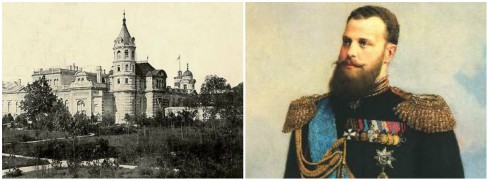
Aleksandr Gerasimov: I have already mentioned The River of Talents and Evenings in the English Hall, but this season the concert hall at the Nikolaevsky Palace has also been a wonderful discovery for me. From an acoustic point of view, the hall is truly remarkable: it allows the timbre of the horn to reveal itself to the fullest possible extent. Most importantly of all, it is exceptionally comfortable to play there, which means that there are absolutely no difficulties in experimenting on stage with different articulations and dynamic nuances; the hall responds beautifully at both ppp and fff. I also remember with great warmth the chamber concerts presented as part of the Musical Team of Russia project in the Amphitheatre of the Sirius Educational Centre and at the Vorontsov Palace.
SPMH: The horn is not the most popular choice of instrument among young people who are just beginning to study music. Tell us the story of how you first became acquainted with it.
Aleksandr Gerasimov: To begin with, my parents sent me to learn the art of playing the piano. I grew up in a musical family. My mother, Irina Valeryevna Gerasimova, is a music theorist and is now a professor in the Department of Old Russian Chant at the Rimsky-Korsakov St Petersburg State Conservatory. My father, Igor Anatolyevich Gerasimov, has worked for many years as a contrabassoonist in the orchestra of the St Petersburg State Academic Capella. On more than one occasion, he has been recognised as one of the finest performers on such a rare instrument and, incidentally, he has also travelled extensively on tour with many renowned ensembles, including the Mariinsky Theatre, the Mikhailovsky Theatre, musicAeterna, and others. As it happened, a friend of our family, Alexander Mikhailovich Petrov, who was then working at the Mikhailovsky Theatre, took up a position at a music school teaching a wonderful instrument – the horn. My parents introduced me to the instrument, showed me photographs of it, and let me hear how it sounded. Without giving it a great deal of further thought, only a week later I set foot in a new music school, where I had a new teacher and a new instrument – the very instrument with which I have remained ever since.
SPMH: The horn, alongside the oboe, is regarded as the most difficult of all musical instruments. What particular challenges does it present, and how do you overcome them? How would you describe the character of your instrument?
Aleksandr Gerasimov: The greatest difficulty presented by our instrument is that, from a purely technical point of view, there is simply no such thing as perfect playing. This is both the challenge and the fascination of the instrument at one and the same time. The journey towards mastering the art of horn playing continues throughout an entire lifetime. A horn player is always hungry for new possibilities and is constantly searching: changing the mouthpiece here, trying new breathing exercises or exercises to develop the embouchure there, or experimenting with an entirely new approach to playing technique. Naturally, horn players have their own distinct schools and traditions, just like performers on any other instrument, but all horn players are united precisely by this endless search for perfection.
SPMH: Is there any truth behind the joke that, whenever a horn player has a solo, the entire orchestra begins to pray for them? Is the risk of missing a note really so great, even in short solo phrases?
Aleksandr Gerasimov: There is a small addition to that joke: all horn players go to heaven, because even God begins to feel sorry for them whenever another “cracked note” flies out somewhere. That happens when you accidentally catch the wrong overtone and produce that unmistakable “squawk” in the middle of a performance. In fact, this is a major problem inherent in the instrument, because even the foremost masters of the horn today – exceptional professionals in their field, including distinguished soloists – may perform dozens of concerts, yet sooner or later, in one of them, a cracked note is bound to slip out by accident. Moreover, it does not necessarily happen in the most difficult passages; perversely, it may occur in precisely the simplest and shortest of phrases. Unfortunately, no one has yet discovered how to eliminate this affliction completely, but the number of cracked notes can be reduced considerably through diligent individual practice, sustained long-note exercises, and careful work on breathing. Even something as straightforward as warming up thoroughly before a performance, or indeed before any playing at all, already makes a substantial difference and considerably reduces the number of cracked notes. Nervousness also has an effect, unfortunately, but this is one of the things that distinguishes a true master: if a musician can not only play with a beautiful tone and shape musical phrases of breathtaking beauty, but can also keep such a significant limitation of the instrument under control, the effect on the audience is truly extraordinary.
SPMH: It is also a technically very complex instrument, made up of a great many different components. Does it require any special care?
Aleksandr Gerasimov: There is one interesting fact about the horn: if you were to straighten out the entire instrument, laying all its slides and tubing in a single line, it would extend to a total length of four to five metres. Every horn player has an entirely individual approach to caring for the instrument. I try to take my instruments to a specialist for professional cleaning once every six months to a year, while applying oil and greasing the slides whenever necessary. Depending on the particular instrument, the strings attached to the horn’s rotary valves may, for example, snap; ideally, you need to carry several spares with you and know how to replace one quickly when required.
SPMH: In your view, what qualities should a soloist possess?
Aleksandr Gerasimov: That is a rather difficult question to answer. In my view, every soloist is a world unto themselves, communicating an entire universe to the listener. Yet there is one thing that unites all soloists: each is a distinct personality who has chosen the path of service and who pours their soul into every single note and every single bar of music.
SPMH: What plans are you making for the forthcoming concert season?
Aleksandr Gerasimov: I intend to continue performing as a soloist. Among my immediate plans is preparing for the 5th All-Russian Music Competition, whose programme is exceptionally extensive and extremely interesting. And most importantly of all, I intend to keep practising – a great deal and with real perseverance!
SPMH: What advice would you have liked to hear at the beginning of your own journey in music, and would now like to pass on to the next generation of young soloists?
Aleksandr Gerasimov: The advice I would like to have given myself at the beginning of my journey, and which I would also offer to other young soloists, is to become less discouraged by setbacks, to treat them with a degree of self-irony, and then to move forward calmly and continue working towards the achievement of their goals.
Interview by Tatyana Mikhailova