“I never part with the cello, and I can no longer imagine my life without it”
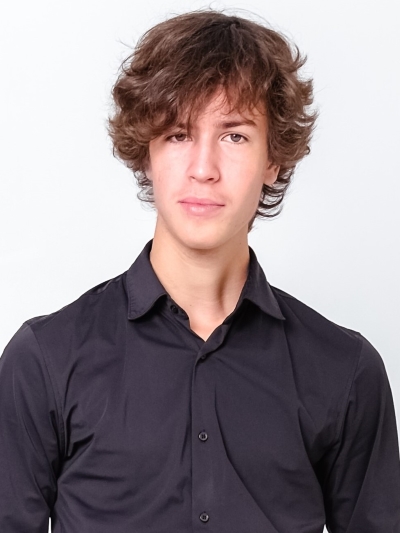
Tikhon Evlanov was born in 2008 in Saint Petersburg. He graduated from the A. S. Dargomyzhsky Children’s Music School, where he studied in the class of Igor Titov. He is a graduate of the Gnessin Moscow Special School of Music, where he studied in the class of Associate Professor Oleg Bugaev. Since 2025, he has been a student of the Tchaikovsky Moscow State Conservatory, continuing his studies in the class of the same teacher. In 2021, he became a First Prize laureate at the Cello Mahler Prize Competition in Prague, Czech Republic, received the Grand Prix at the Moscow Festival-Competition named after Odoevsky in Moscow, and was awarded First Prize at the International Competition named after Georgy Sviridov in Saint Petersburg. In 2022, he became a Second Prize laureate at the International Music Competition named after Evgeny Mravinsky in Saint Petersburg. In 2023, he was awarded Second Prize at the International Cello Competition named after Sviatoslav Knushevitsky in Saratov and First Prize at the Grand Moscow Competition for Performers on String Instruments in Moscow. In 2026, he became a Second Prize laureate at the international competition Yamal Symphony in Yamal. He has been a participant in the programmes of the Saint Petersburg Music House since 2024.
Saint Petersburg Music House (SPMH): Please tell us about becoming a prizewinner at this year’s international competition Yamal Symphony.
Tikhon Evlanov: I was awarded Second Prize at the Yamal Symphony competition. It was an unforgettable trip. Many of the other participants and I had known one another for quite a long time and had performed more than once on the same concert stages. It was my first time in the North. The blue snow and frosts approaching minus 40 degrees also left a very strong impression. Even when we had rehearsals in a neighbouring building, we were driven there by car so that the instruments would not crack from the cold. And, of course, the most valuable event of the competition for me was meeting the conductor Ivan Nikiforchin. He has extraordinary energy and charisma. He is a very sensitive musician and a very pleasant person.
SPMH: Elgar’s Cello Concerto in the third round — could you tell us about it? What touched you in this work?
Tikhon Evlanov: Elgar’s Concerto is one of my favourite works. It is grand and large-scale music, yet at the same time it is deeply soulful. I began working on it when I was fifteen, and I was not immediately able to understand its depth. The third and fourth movements were especially difficult for me. I am certain that this is only the beginning of my acquaintance with Elgar, and that many more discoveries in this beautiful music still lie ahead.
SPMH: In April this year, you took part in the Saint Petersburg Music House master classes Higher Music Performance Courses in Yalta. What do you remember most about those ten days in Crimea?
Tikhon Evlanov: This was not my first time taking part in the Yalta intensive programme. I go there with great pleasure. It is a place where one manages to combine work and rest at the same time. I always leave with a very pleasant feeling, and yet I also immediately want to return again.
SPMH: In your opinion, what role does the Saint Petersburg Music House play in the professional development of an emerging soloist?
Tikhon Evlanov: I believe that all the projects of the Saint Petersburg Music House offer opportunities for professional growth and for making new artistic acquaintances. I am very grateful and happy to be part of these projects.
SPMH: hat are the most vivid musical events connected with the Saint Petersburg Music House that you remember?
Tikhon Evlanov: The most vivid memories are, of course, of the first concert. After The River of Talents, I performed Tchaikovsky’s Variations on a Rococo Theme in Kazan. The hall there is astonishing — one of the finest in which I have ever had the chance to perform. I remember the master classes no less vividly than the concerts. They are always extremely intensive, rich in content and very interesting.
SPMH: Does your love of music come from your family? Did you follow in anyone’s footsteps?
Tikhon Evlanov: My grandfather plays the domra and the garmon, but purely as an amateur pursuit. Apart from him, there are no musicians in the family. My parents are actors. They both graduated from the Russian State Institute of Performing Arts in Saint Petersburg, the theatre academy on Mokhovaya Street.
SPMH: How did you discover the cello for yourself?
Tikhon Evlanov: I had never planned to become a professional musician. My parents simply decided to send me to music school for my general development. At the age of four, I chose the balalaika, and my mother took me to a music school. But there we were told that my fingers were still too weak and that we should wait a little. We went into the violin and accordion classes, and everywhere we were told the same thing. The school security guard suggested that we go and see the deputy head. That was how I met my first and dearest teacher, Igor Fyodorovich Titov. He invited me to join his cello class. Since then, I have never parted with the cello, and I can no longer imagine my life without it.
SPMH: The same instrument will sound different in the hands of different musicians. What changes the “voice” of an instrument? And how does one find one’s own “voice”?
Tikhon Evlanov: That is a very difficult question. In addition to physical and technical skills, one must constantly cultivate and develop one’s inner ear and artistic taste. It is from all these elements together that the sound of the instrument is formed. I understand that I am still only at the very beginning of this path, and that I will be searching for the “voice” of my cello throughout my entire life.
SPMH: How do you work on a new piece, and what do you do if it does not “yield” to you?
Tikhon Evlanov: When I begin working on a new piece, I study the history of how it was created, listen to other performers, and then work on it together with my teacher, Oleg Vladislavovich Bugaev. If a piece does not “yield”, it means that you have simply not worked on it enough.
SPMH: How does a person’s character reveal itself in their playing? And what other aspects of a musician’s personality become visible during performance?
Tikhon Evlanov: I believe that the stage is like a mirror: it reveals the performer. Very often, when you look at an artist on stage, you can understand a great deal about them. But a true professional must be able to emphasise his strengths and conceal his weaknesses. I do not always manage to do this yet.
SPMH: Which works would you include in your solo repertoire for the coming years?
Tikhon Evlanov: I am now beginning to work on sonatas by Debussy and Brahms. I also plan to work on pieces by Shostakovich and Prokofiev. As for concertos, Schumann is among my immediate plans.
Interview by Tatyana Mikhailova.