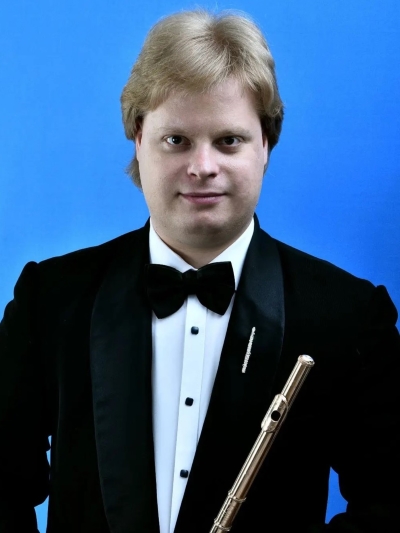
"‘For me, Mozart is like a pure source of inspiration to which I long to return again and again"
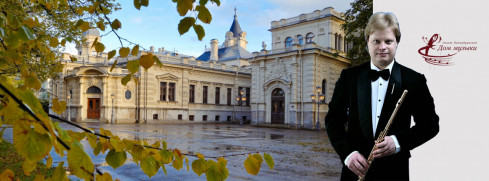
Petr Khudonogov was born in Krasnoyarsk in 1999. He graduated from Children’s Music School No. 2 in Krasnoyarsk, where he studied under Sergei Khudonogov, and from the P. I. Ivanov-Radkevich Krasnoyarsk College of Arts, continuing his studies with the same teacher. He is a graduate of the Dmitri Hvorostovsky Siberian State Institute of Arts, where he studied under Professor Anatoly Ivanov, Honoured Artist of the Russian Federation. In 2025, he completed his postgraduate assistantship and internship programme there with honours under Professor Vladimir Kudry, Honoured Arts Worker of Russia. He is a multiple winner of the Youth Delphic Games of Russia and the CIS. In 2020, he won the Vienna International Music Competition in Austria and was awarded Second Prize at the Manhattan International Music Competition in the United States. In 2025, he was awarded Third Prize at the Città di Alessandria International Music Competition in Italy. In 2026, he won the Giuseppe Gariboldi International Flute Competition in Italy, where he also received a special prize, and the 5th Cahit Koparal International Flute Competition in Turkey, where he received two special prizes. He has been a member of the Krasnoyarsk Academic Symphony Orchestra since 2015 and a soloist with the orchestra since 2020. Since 2026, he has also been a soloist with the Krasnoyarsk Regional Philharmonic. He has been a participant in the programmes of the Saint Petersburg Music House since 2018.
Petr Khudonogov: September brought me one of my most significant victories in recent years. At the 5th Cahit Koparal International Flute Competition in Marmaris, Turkey, I was awarded First Prize and two special prizes – invitations to tour Italy and Turkey internationally with chamber and symphonic programmes during the forthcoming concert season. This means a great deal to me. I have already begun preparing the repertoire for these concerts. The programmes will include true masterpieces for flute by great Russian composers of the Classical and Romantic periods and the twentieth century.
The competition was extremely strong. Of more than 120 applications from around the world, only 29 flautists – from Russia, Germany, France, Hungary and Turkey – were admitted to the live rounds. The standard was exceptionally high, so listening to my fellow musicians was a pleasure in itself: each performer displayed the qualities of their own school, their distinctive sound and their individual understanding of style. The competition programme was fascinating but demanding. During the rounds, we performed the rarely heard sonata for solo flute by the Turkish composer Fazıl Say, The Solitude of Dignity – I was delighted to discover this wonderful contemporary composer and his music – as well as the brilliant caprices of Niccolò Paganini, in arrangements by leading contemporary flautists, and chamber and virtuoso works by Doppler, Reinecke, Prokofiev, Martin, Bozza and Briccialdi. In the final, each competitor performed a concerto for flute and orchestra of their choice, by C. P. E. Bach, Mozart, Mercadante or Reinecke. I chose C. P. E. Bach’s brilliant and vibrant Flute Concerto in D minor. For a flautist, this is a profoundly eloquent concerto. It demands not only technical precision and agility, but also the ability to move instantaneously between emotional states – from impetuosity to profound contemplation. The sound must be alive and supple, with incisive accents, yet lyrical at the same time. I feel a particular affinity with this Concerto because one can already sense the breath of the future in it: rather than Baroque poise, it has a vivid, almost Romantic nervous energy and individuality of expression. Performing it is always a particular pleasure and joy for me. The feedback from the competition’s highly distinguished jury was especially valuable: in all three rounds, the panel awarded my performances between 99 and 100 points out of a possible 100. This gave me tremendous inner confidence as I continue to refine my artistry.
SPMH: Before the competition, you attended the Saint Petersburg Music House Summer Academy. Did the masterclasses, held in Sochi this year and previously in Crimea, help prepare you for this victory?
Petr Khudonogov: Absolutely. My victory at the competition was the direct result of the intensive and rewarding work I undertook at the Saint Petersburg Music House Summer Academy masterclasses in Sochi this August. I would like to express my profound gratitude to the leadership of the Music House and, personally, to its Artistic Director, People’s Artist of Russia Sergei Pavlovich Roldugin, for this unique opportunity, on the very eve of the competition, to receive invaluable advice and guidance in masterclasses with one of Russia’s finest teachers – Vladimir Leonidovich Kudry, Professor at the Gnessin Russian Academy of Music and Honoured Arts Worker of Russia. During the masterclasses, the competition programme was honed to perfection. I would also like to thank the Saint Petersburg Music House for the inspired idea of giving young performers an opportunity, upon completing the masterclasses, to present to an audience the competition programmes on which they had been working so intensively – both at the Rosa Khutor resort and at the Sirius Concert Center in Sochi. You perform on stage while the professors listen attentively alongside the audience; after the concert, they offer their final recommendations, explaining how everything sounded from the hall, what had worked well and what could still be improved. These concert performances were, of course, enormously helpful to me. Thanks to them, I felt much more confident on stage during the competition rounds in Turkey, and that is extremely important.
SPMH: This spring, you also won the Giuseppe Gariboldi International Competition in Italy. What surprised you about Italy, the atmosphere at the competition and your fellow competitors?
Petr Khudonogov: The competition took place in the beautiful city of Salerno, in the Campania region of southern Italy. It was my first visit to this wonderful part of the country. The competition rounds were open to the public, so residents and visitors alike could come and listen to the performances. It was immensely gratifying to feel the audience’s goodwill, sincere appreciation and support. Naturally, this helped to ease the tension and allowed me to devote myself entirely to the music I was performing. The competition comprised three rounds. More than 80 flautists came from virtually every corner of the world – from Russia, the United States, Canada, Germany, France, Hungary, Romania, Bulgaria, Switzerland, Spain, Japan, Turkey, China and other countries. The finalists represented Russia, Hungary and Japan. The standard of performance was exceptionally high. From a professional perspective, it was fascinating to listen to the other competitors and then speak with them afterwards, discussing various musical and technical points. Most of my fellow competitors also attended my performances in every round, and it was very interesting to hear their impressions. To me, the atmosphere felt more like a creative dialogue than a fierce contest or rivalry. Everyone listened to the other performances and, in doing so, immediately recognised their own strengths and weaknesses as a performer.
SPMH: As you listened to the competitors, did you notice differences between the various national schools and performance traditions?
Petr Khudonogov: Certainly. The differences between schools of performance can be heard very clearly. The Russian school, in which I was trained, often produces a powerful, rich, full-bodied sound and great emotional openness. The French and German traditions place greater emphasis on transparency, suppleness and elegance. Turkish and Italian musicians often bring a distinctive fluidity and warmth to their sound. At the highest level, however, individuality always prevails. One’s school provides the foundation and the language; beyond that, the musician’s own personality emerges. The most fascinating moments occur when different traditions meet in the same hall and a genuine dialogue begins.
SPMH: How do you work on your sound? Do you have any signature techniques?
Petr Khudonogov: I work on my sound constantly – it is a never-ending process. Since childhood, I have been enchanted by the flute’s soft, enveloping, golden timbre. My father would often warm up at home before concerts, and that sound became familiar and especially dear to me. I devote a great deal of attention to breathing, breath support and freedom in both the embouchure and the body. I enjoy exploring different attacks and dynamic transitions within a single sustained note, so that the sound ‘breathes’ and changes colour. Recordings of my own performances are extremely helpful, as is working with masters who can hear things that I may no longer notice myself. For me, the ideal sound is one in which technique dissolves completely, leaving only living, eloquent music.
SPMH: Mozart, whose 270th birthday is being celebrated this year, occupies a special place in music. What place do his works hold in your repertoire?
Petr Khudonogov: Wolfgang Amadeus Mozart is a great love of mine and occupies a distinct and vitally important chapter in my artistic life. I always perform his flute concertos, chamber sonatas and pieces with immense pleasure and reverence. His music contains absolutely everything: crystalline clarity, subtle humour, profundity and extraordinary lyricism. The Flute Concerto in G major, K. 313 is my favourite of his works for flute. Mozart composed it in Mannheim in 1778 on a commission from the Dutch amateur musician Ferdinand De Jean. I perform this Concerto with a special feeling. There is not a single superfluous note in it; every phrase seems natural and necessary. The Concerto teaches me purity of style, inner freedom and the ability to be simple and profound at the same time. Whenever I step out on stage to perform this work, I feel that Mozart is reaching out his hand and saying: ‘Simply be honest and play from the heart.’ That is perhaps the most valuable gift music can offer. For me, Mozart is like a pure source of inspiration to which I long to return again and again.
SPMH: Which work do you find the most technically demanding?
Petr Khudonogov: Technically, the most demanding works for me are probably Niccolò Paganini’s celebrated 24 Caprices in arrangements for flute. These pieces were originally written for violin and constitute a veritable encyclopaedia of virtuosity. When arranged for flute, none of their difficulty disappears; on the contrary, it assumes an entirely new character. One must preserve the full incisiveness of the bowing effects, the precision of the double notes, the rapid passages, leaps and exceptionally demanding articulation, while taking into account the entirely different nature of our instrument. The Caprices are frequently included in international competition programmes precisely because they instantly reveal a performer’s command of the instrument. There is no way to ‘hide’ behind a beautiful sound or an expressive phrase – the technique must be flawless. Each Caprice requires separate, painstaking work on speed, rhythmic precision, the co-ordination of fingers and tongue, and freedom of breathing. For me, they always present a serious challenge. They compel me to remain in peak condition, refine my finger technique and learn to perform the most difficult passages not merely accurately, but musically as well. This is precisely why, despite all their difficulty, I have immense respect for Paganini’s Caprices. They truly steel the performer.
SPMH: What is your view of a soloist’s displays of virtuosity on stage? Do they help to engage the audience?
Petr Khudonogov: I take a calm and pragmatic view of virtuosity. If it helps to reveal the emotion, character or dramatic development of a work, it is wonderful and genuinely captivates the audience. But when virtuosity becomes an end in itself, the listener quickly senses the emptiness. I try to ensure that technique always remains a means rather than an end. The most powerful impression comes when an exceptionally difficult passage suddenly turns into a living, natural melody.
SPMH: The 135th anniversary of Prokofiev’s birth offers an excellent opportunity to discover his works in a new light. You have performed his compositions, including music from his ballets and operas, as part of the Music House’s Embassy of Musical Mastery project. What do you find particularly captivating about his music?
Petr Khudonogov: For me, Sergei Prokofiev’s music is an extraordinary combination of wit, energy and lyricism, with a distinctive, slightly ‘prickly’ quality. I am always struck by the remarkable juxtaposition of contrasts in his music. On the one hand, there are incisive, propulsive rhythms, sharp accents and characters drawn with almost graphic clarity. On the other, there is profound and utterly sincere lyricism, at times possessing a childlike purity and poignancy. He manages to be harsh and tender, audacious and vulnerable, all at once. It is precisely this inner tension that makes his works so vivid and compelling. The music is constantly moving, breathing and changing masks. Behind all Prokofiev’s angularity, one always senses genuine human energy and strength. At a concert in Chennai presented as part of the Saint Petersburg Music House’s Embassy of Musical Mastery project, I performed his only Flute Sonata in D major, Op. 94 – one of the most radiant and captivating works in the entire flute repertoire. The concert also featured celebrated excerpts from Prokofiev’s opera and ballet music in arrangements for flute: the March from the opera The Love for Three Oranges, Juliet as a Young Girl, Dance of the Girls from the Antilles and Dance of the Knights from the ballet suite Romeo and Juliet. Performing these short pieces is always a particular pleasure. The March is full of vivid, slightly grotesque energy and Prokofiev’s characteristic humour. ‘Juliet as a Young Girl’ possesses remarkable freshness, lightness and touching tenderness. ‘Dance of the Girls from the Antilles’ brings warmth and fluidity, while ‘Dance of the Knights’ conveys power, character and an almost tangible theatricality. Performing these miniatures is like leafing through a favourite album: every image is instantly recognisable and precisely drawn.
SPMH: What music do you enjoy listening to away from your professional work?
Petr Khudonogov: Away from my professional work, like many musicians, I greatly value silence and the sounds of nature. After rehearsals, concerts and competition performances, they offer the best way to ‘reset’ my hearing and allow my mind to rest. The rustling of leaves, the lapping of water and birdsong are genuinely therapeutic for me. Of course, I cannot do without music either. I take great pleasure in listening to masterpieces of the symphonic repertoire, particularly by composers whose work has a profound affinity with my own sensibilities – Beethoven, Tchaikovsky, Shostakovich, Prokofiev and many others. And naturally, I sometimes cannot resist the pleasure of listening to wonderful recordings of flute music not as a performer analysing every articulation and breath, but simply as a listener.
At such moments, I remember once again why I fell in love with this wonderful instrument.
Interview by Tatyana Mikhailova